
Basement Waterproofing · Sump Systems
Backup Sump Pump
Installation
in Maryland
Your primary pump fails exactly when it's under the most stress. The backup is there for that moment.
Zoeller cast-iron battery backup sump pump systems — sized for Maryland's storm inflow, set above the primary float, and tested before we leave. Lifetime transferable guarantee. Honest, consultative guidance.
Your Last Line of Defense When the Power Goes Out
What a Battery Backup Sump
Pump Actually Does
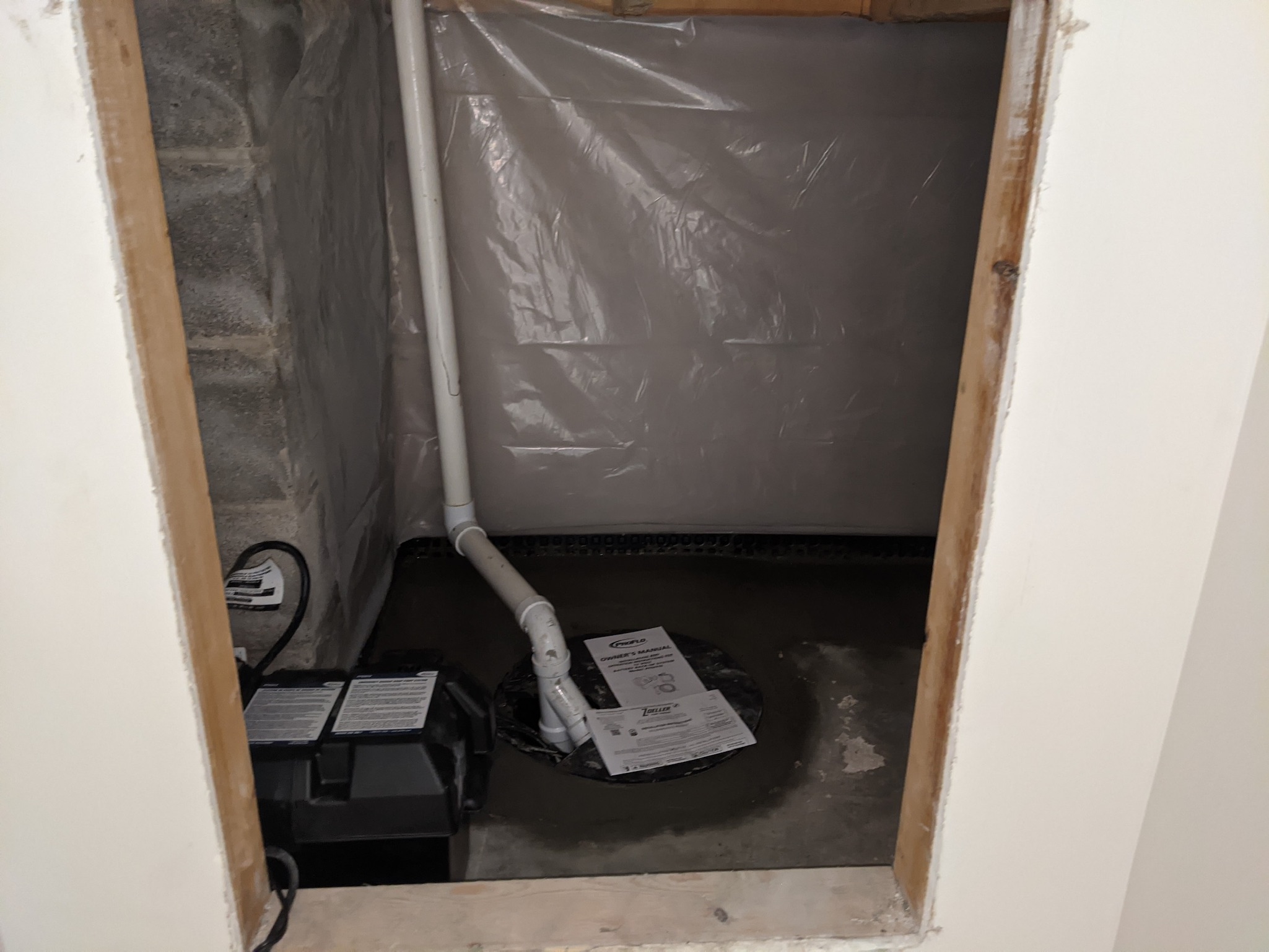
A battery backup sump pump sits in the same basin as your primary pump — or an adjacent basin — and activates automatically when the primary fails to keep up. The float arm is set 2–3 inches above the primary float, so the backup only runs when the primary is overwhelmed or offline.
Maryland storms create the exact conditions that kill primary pumps: sustained power outages, float switches jammed with debris, motors burning out from running continuously for hours. BGE outages during major storm events routinely last 6–12 hours in Baltimore, Harford, and Carroll counties. Without a backup, a working sump basin becomes a flood-waiting-to-happen the moment power cuts out.
OBW installs Zoeller cast-iron backup units — the same commercial-grade manufacturer we use for primary pumps. Not plastic. Not a proprietary part that requires a franchise call to replace. A Zoeller can be serviced by any qualified plumber if needed.
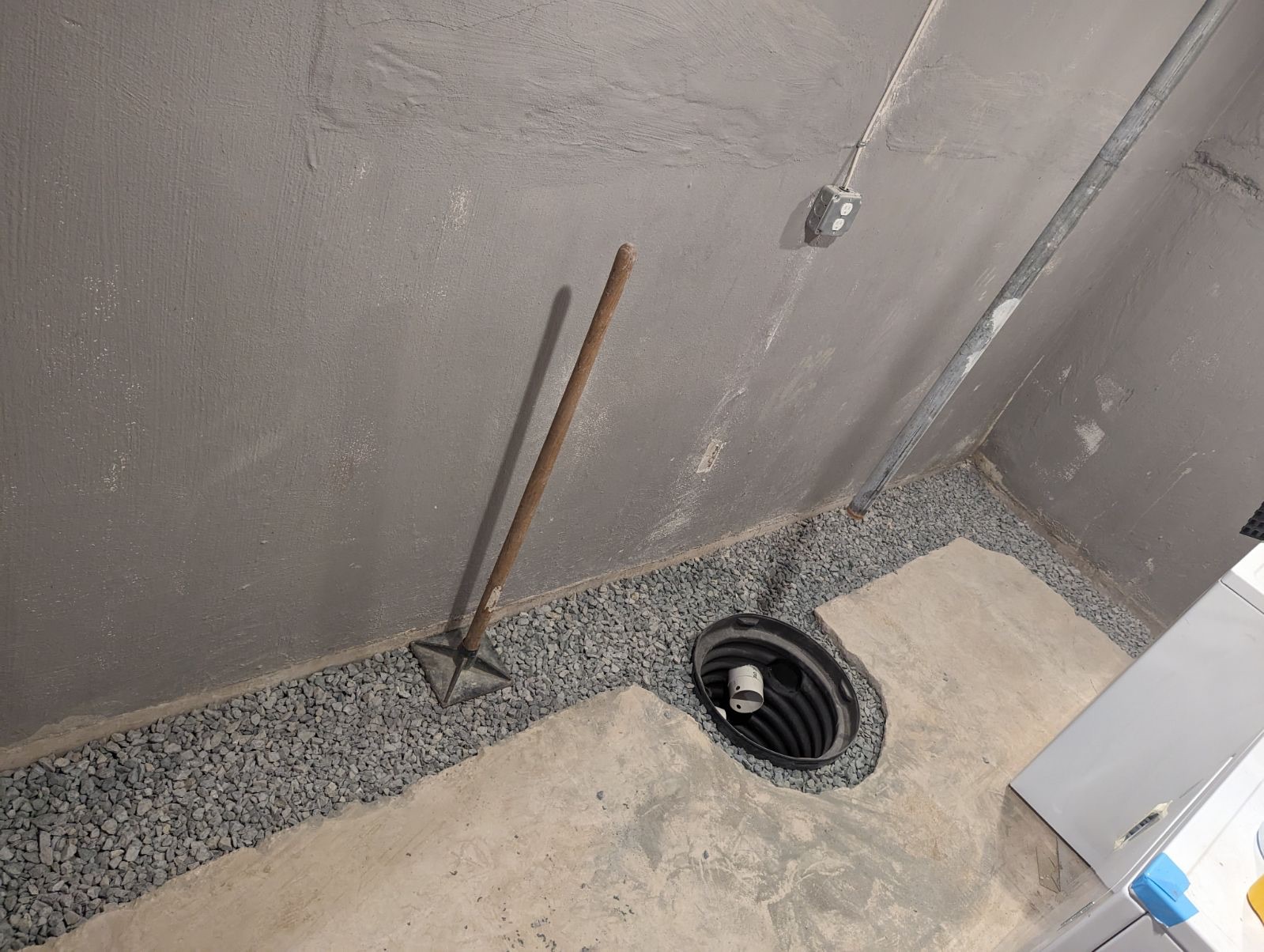
Backup sump tied to perimeter drain tile — complete system protection for Maryland storms
If Any of These Apply, You Need a Backup
Warning Signs Your Sump
System Has No Safety Net
Maryland homeowners often assume a working primary pump is enough. These scenarios are common — and each one ends the same way when the primary goes down.
- Primary pump only — no backup at all — in a basement with active inflow
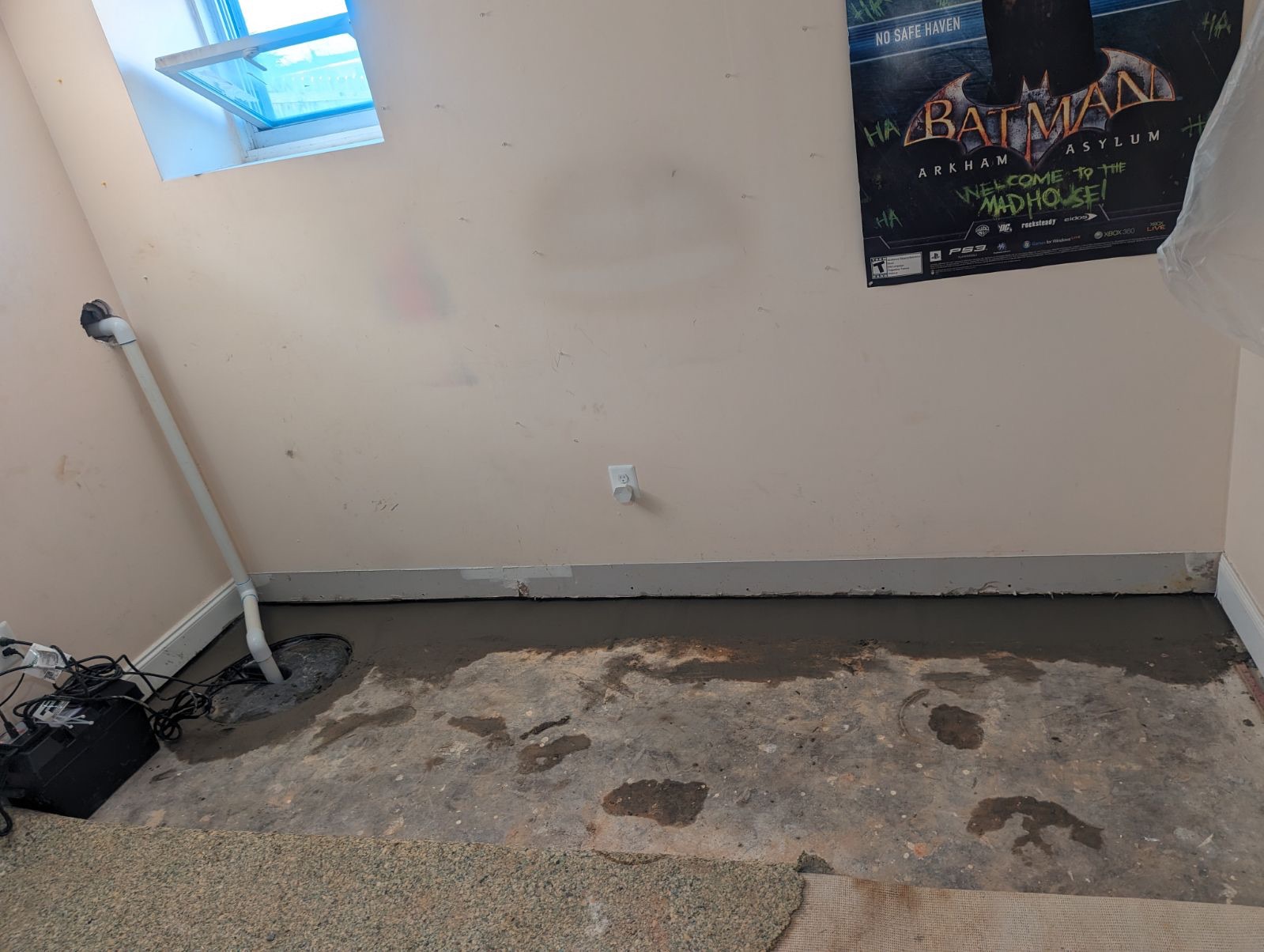
- Basement flooded once during a storm even though a pump was present
- Pump battery over 3 years old and never tested under load
- No high-water alarm to alert you when the basin is rising
- Property has finished space or stored items in the basement — a flood is not recoverable
What You Get
What OBW's Backup Sump System Includes
Every component is specified for Maryland conditions. No plastic units, no proprietary parts, no guessing about battery condition before a storm.
Zoeller Cast-Iron Backup Pump
Not a plastic unit. Cast-iron construction runs harder and longer under sustained inflow — the exact condition you need it to perform in when your primary fails during a storm.
Sealed Deep-Cycle Battery with Charger
Sized to your basin's inflow rate. The charger keeps the battery at full capacity between uses. Battery health indicator included — you know its status before a storm, not after.
Correctly Set Float Arm
Float arm set 2–3 inches above the primary pump float. The backup only activates when the primary fails to keep up — it doesn't fight your primary pump for the same water level.
High-Water Alarm
Activates if inflow exceeds both pumps' capacity — alerting you to an unusual event before water reaches your floor. An audible alarm is standard; monitoring integration available.
PVC Discharge Routing
Tied to your existing discharge line where feasible, or routed separately if needed. Properly sloped and terminated away from the foundation — not re-directing water toward the house.
Written Annual Test Procedure
Before the crew leaves, we walk you through how to manually test the backup annually — including what to look for and when to replace the battery. No guesswork left on the table.
Assessed, Sized, Installed, and Tested. Same Day.
How OBW Installs a Backup
Sump Pump System
Every installation follows the same four-step sequence. We don't leave until the backup has been manually triggered and confirmed operational.
Sump Basin Assessment
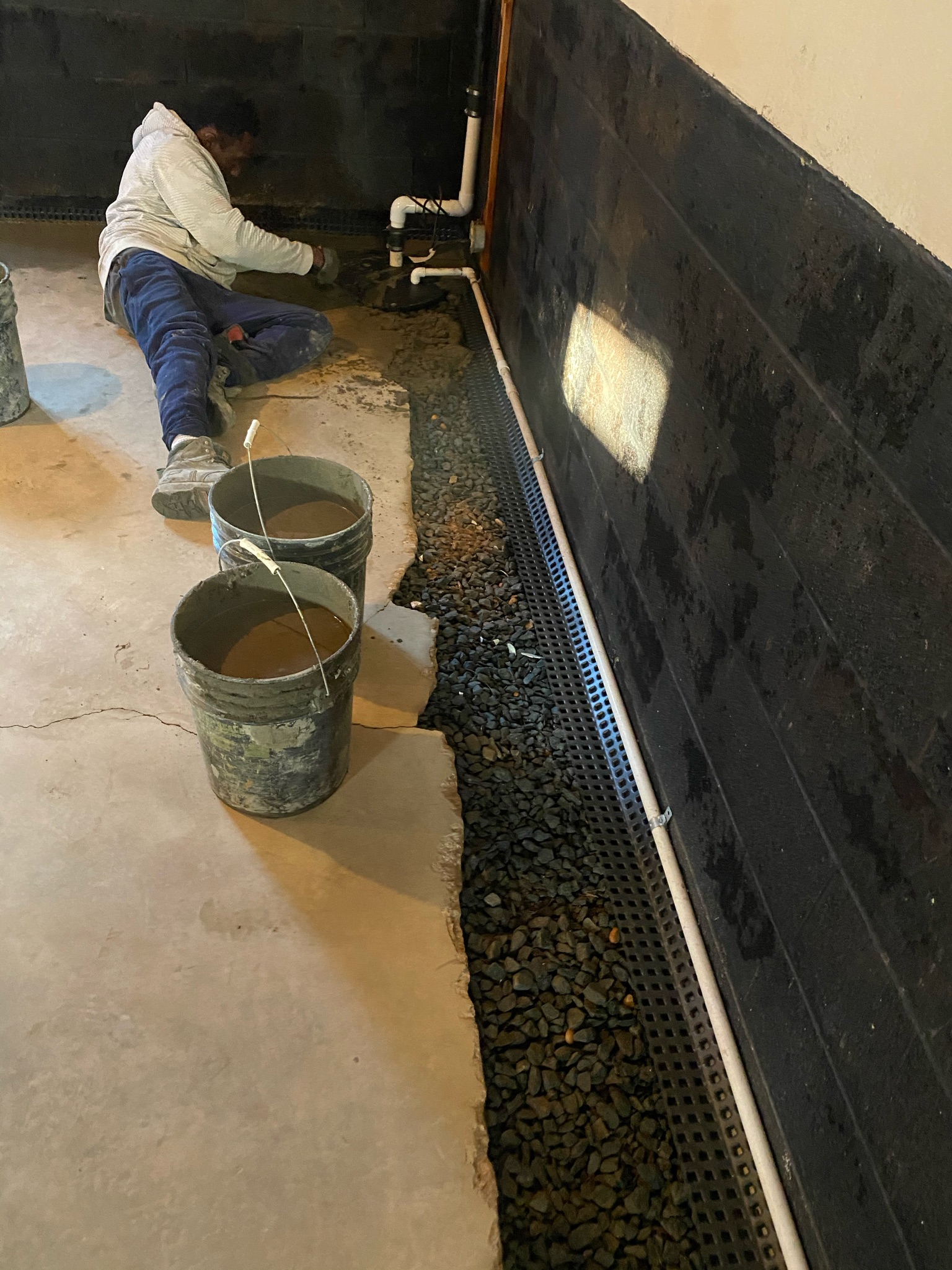
Inspect existing basin size, depth, and condition. Check primary pump operation and float. Assess inflow rate. Determine if basin expansion is needed before the backup can be properly installed.
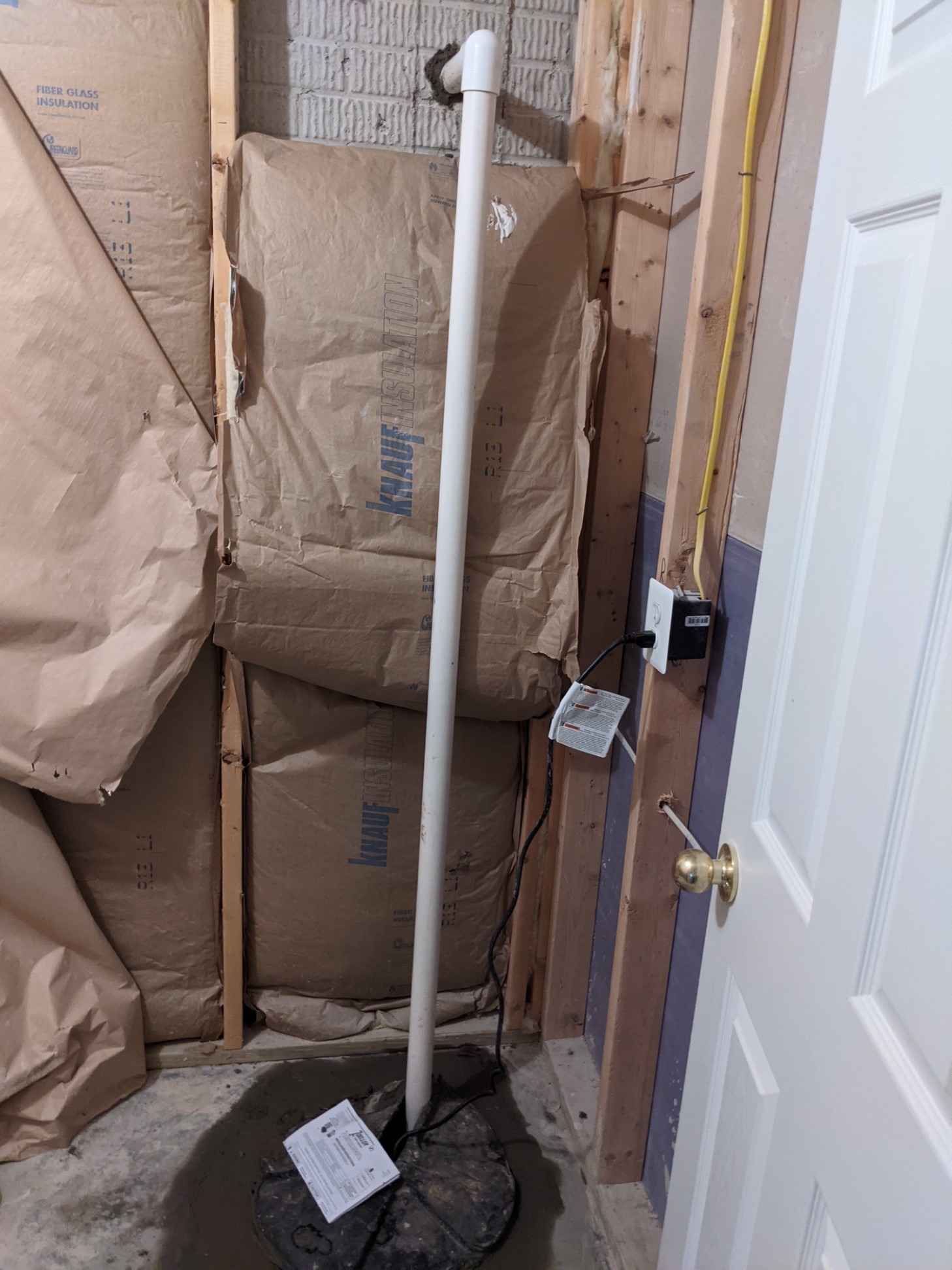
System Selection & Sizing
Match battery capacity and pump output to your basement's typical inflow rate. Combinator vs. separate backup unit — determined by basin size and existing pump type, not by what costs more.
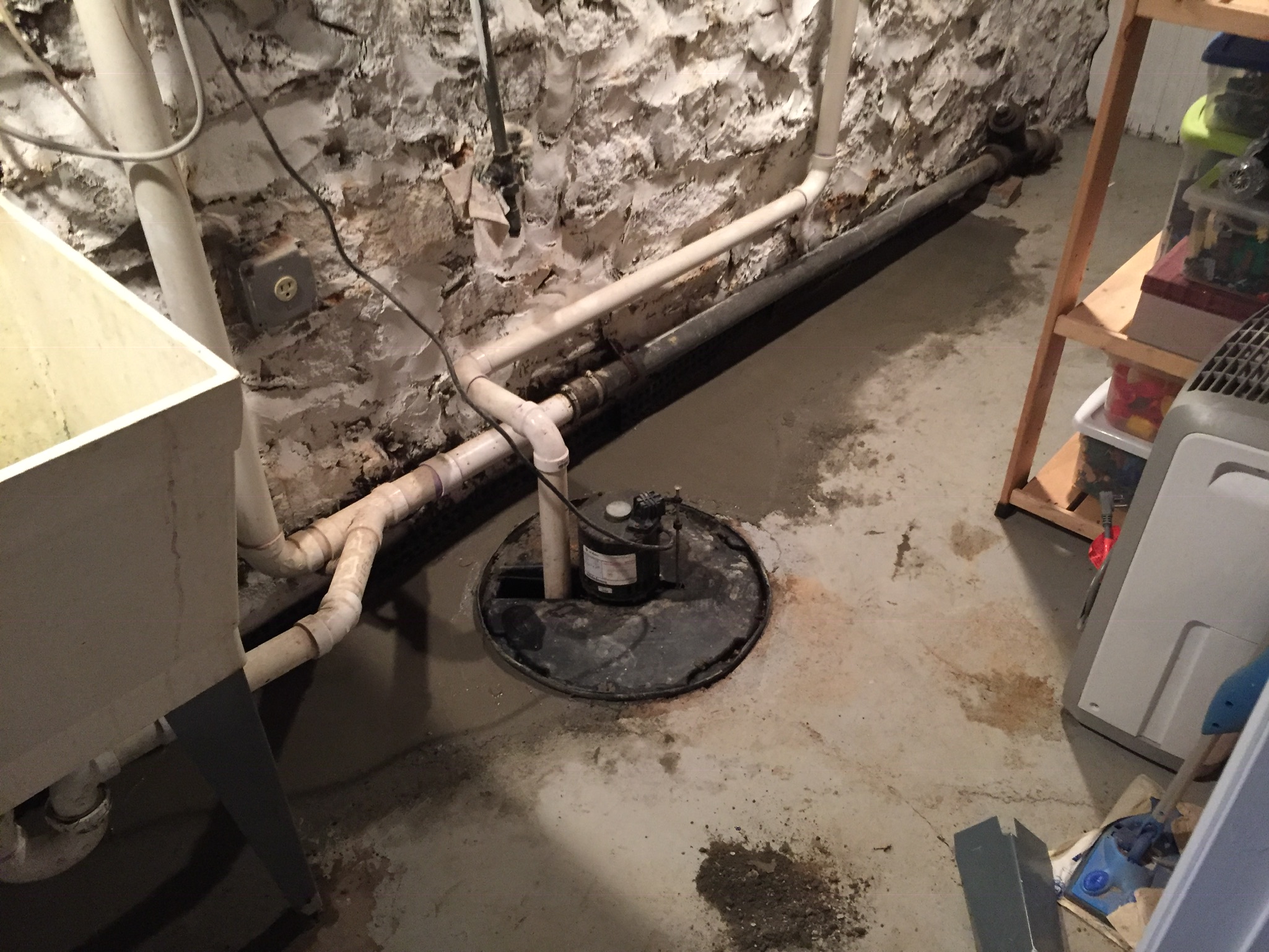
Backup Pump & Battery Install
Set float arm 2–3 inches above primary float so backup only activates when primary fails. Hard-wire the battery charger. Test activation manually before leaving — every time.
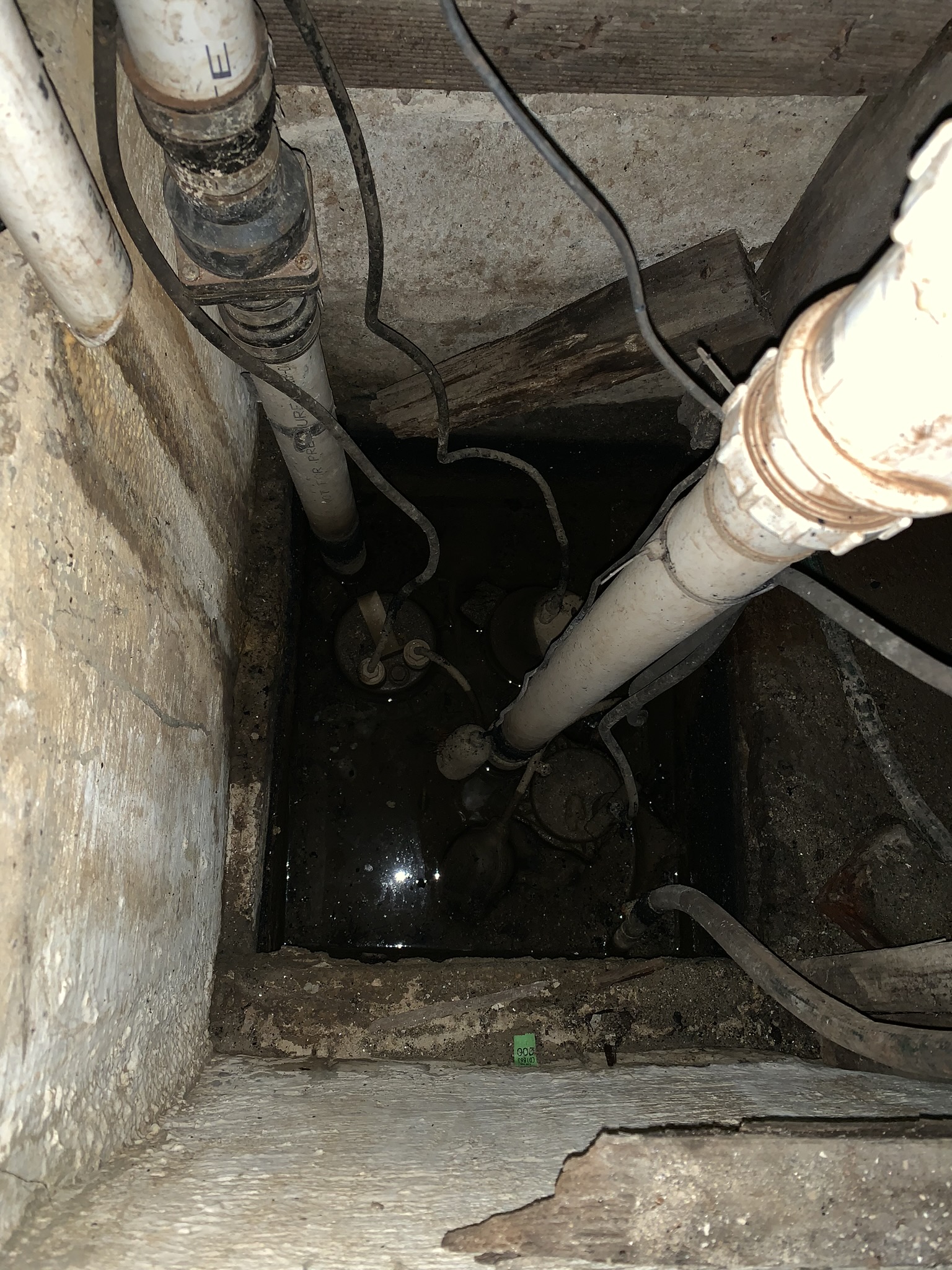
Alarm & Monitoring Setup
Install high-water alarm that activates if both pumps can't keep up. Connect monitoring where applicable. Walk homeowner through annual battery test procedure before the crew leaves.
Real Maryland Jobs
Recent Backup Sump Pump
Installations in Maryland
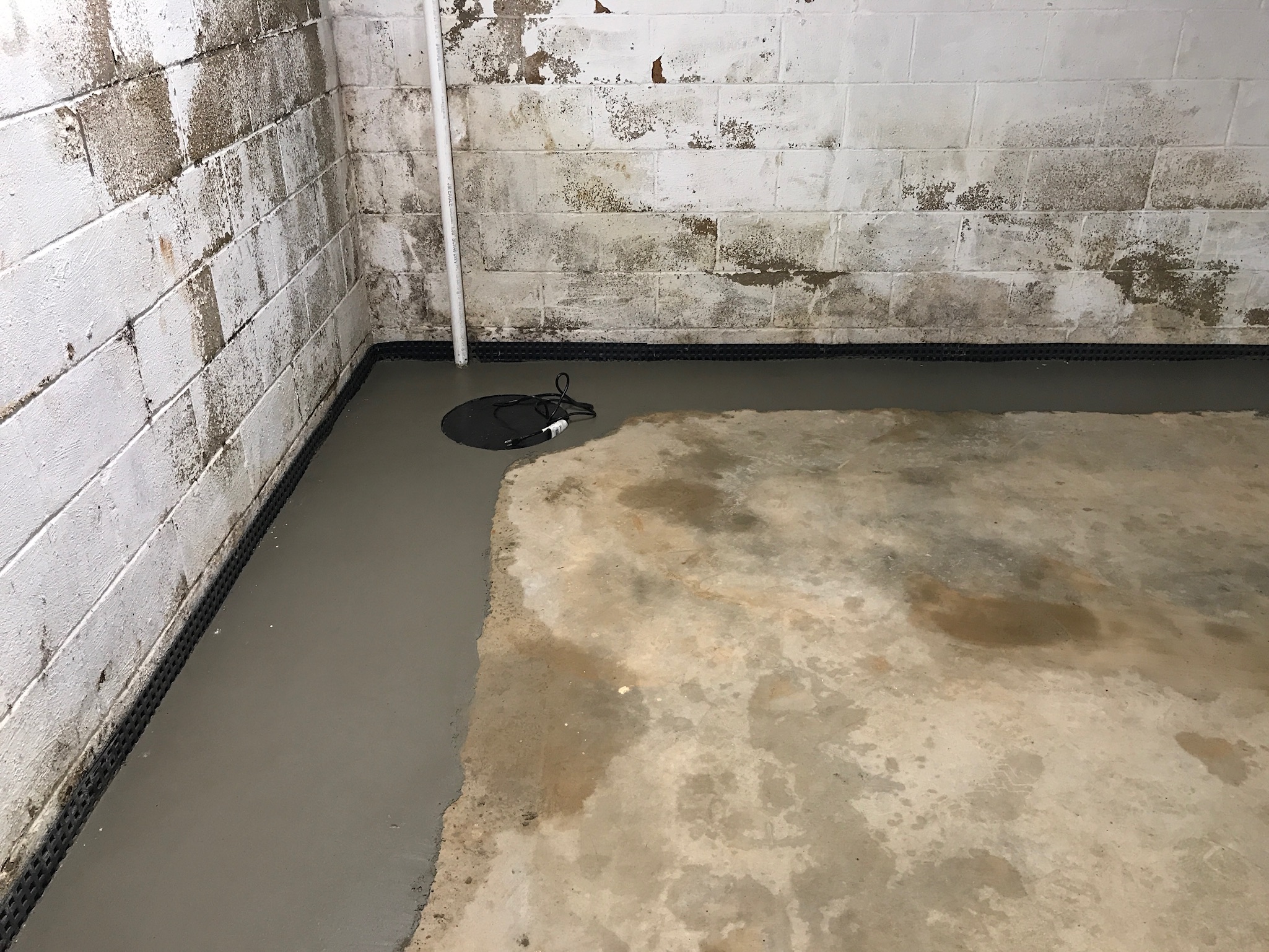
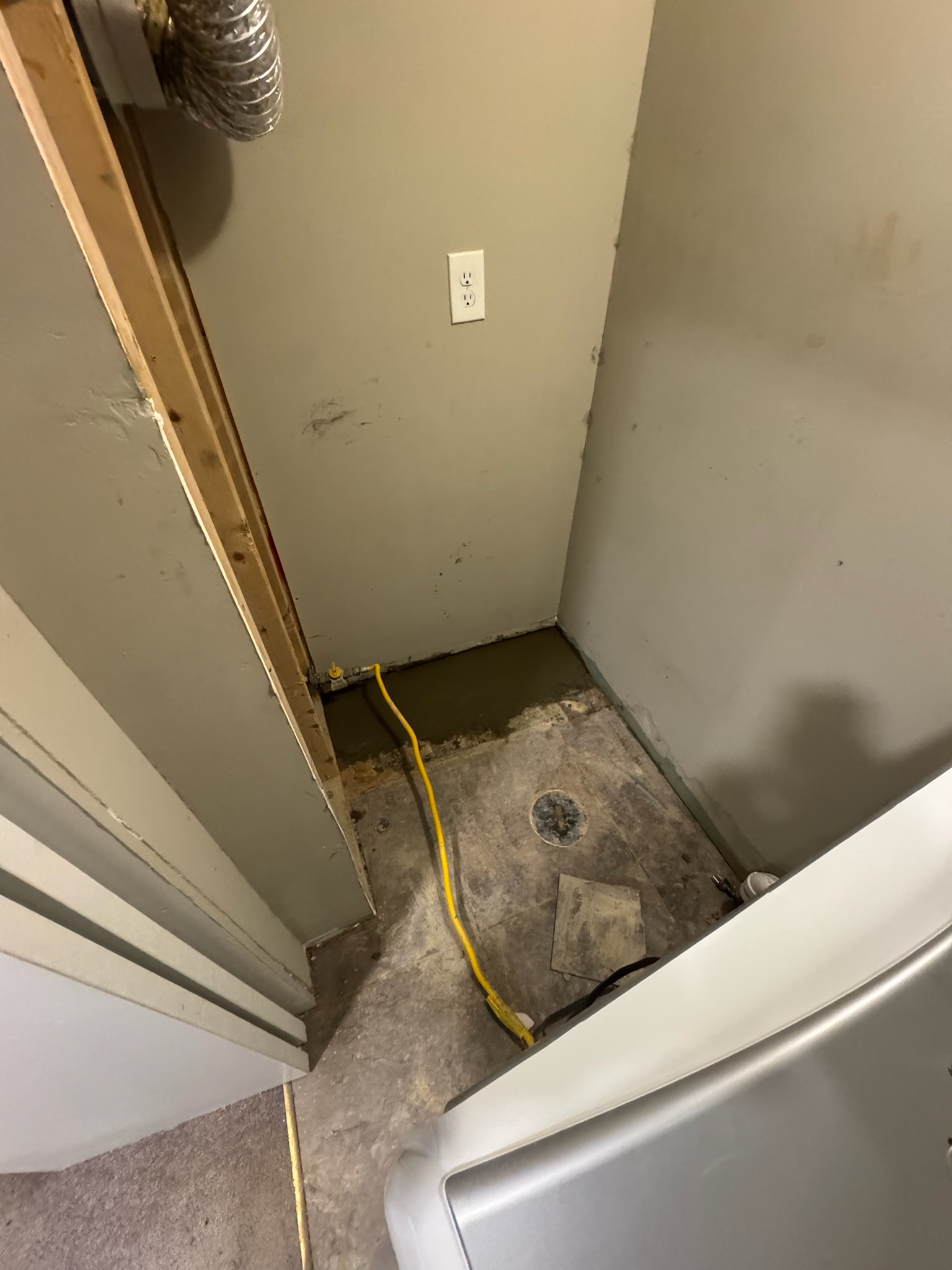
Every photo below is an OBW job — real Maryland homeowners, real basements, real storms survived. Our inspectors document every installation before and after.
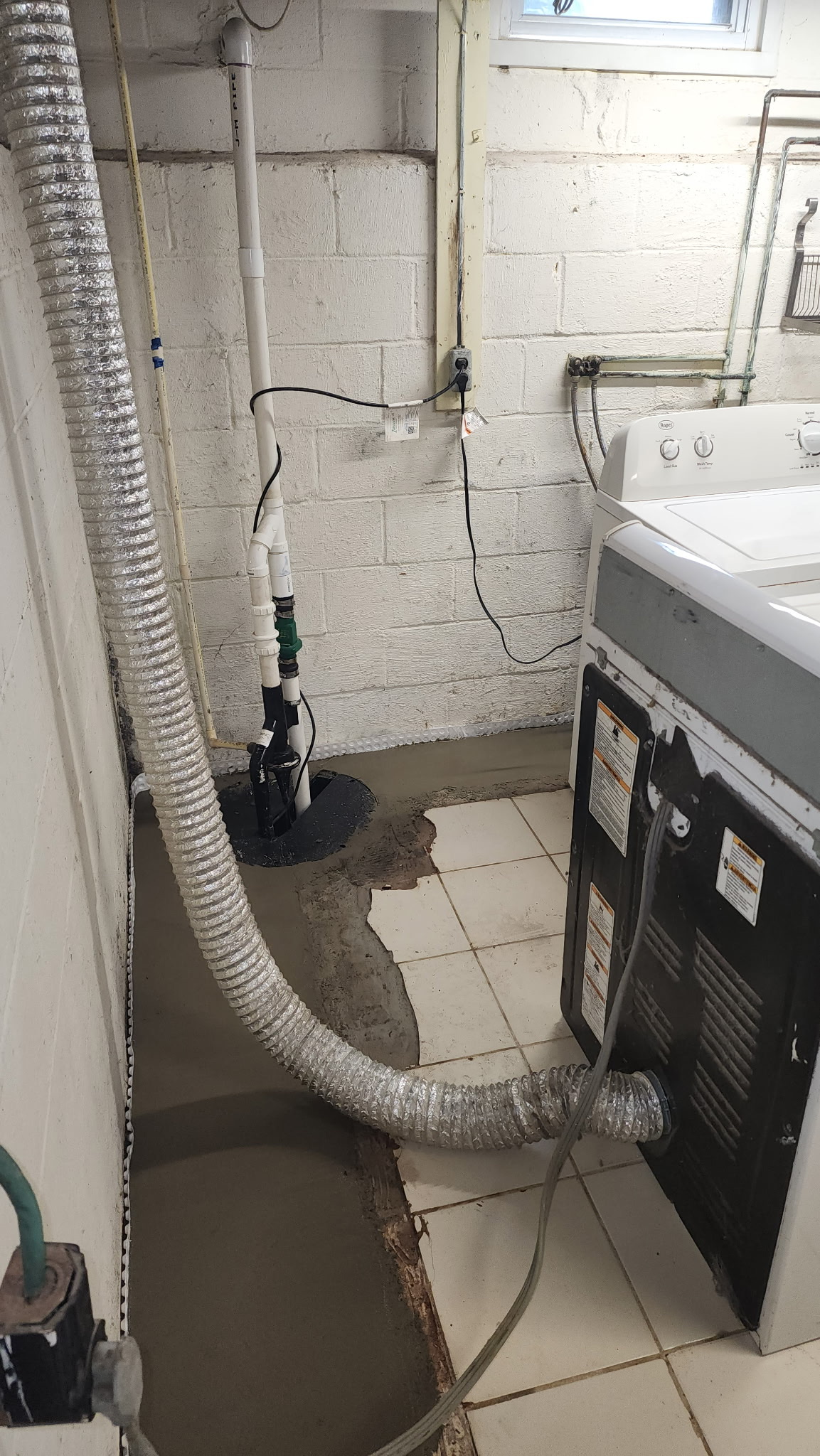 Baltimore County
 Zoeller cast-iron backup added to existing primary pump system. Battery charger hard-wired. High-water alarm installed.
 Harford County
 Full backup system installed alongside interior drainage upgrade. Combinator configuration — basin replaced to accommodate both units.
Carroll County High-inflow basement required dual-battery configuration. Both pumps tied to common discharge. Runtime effectively doubled.
 Anne Arundel County
 Backup sump added to perimeter drain tile system. New basin installed; concrete restored. Dry through two nor'easters since install.
Honest Answers. No Sales Pitch.
Common Questions About Backup
Sump Pump Installation
If your question isn't here, call (443) 855-5600. Our inspectors answer questions and give honest, consultative guidance.
How long does a battery backup sump pump run during a power outage?
Most Zoeller battery backup units run 5–7 hours of continuous pumping on a full charge under moderate inflow, or 2,000–3,000 gallons depending on cycle frequency. During a storm where the power is out and inflow is heavy, plan for 4–5 hours of effective operation. Combinator systems (primary + backup in one basin) extend this.
Test your battery annually — a battery that hasn't been tested in 18+ months may not hold charge when you need it. Maryland storm events routinely knock out power for 6–12 hours in suburban counties. If your basin has high inflow, ask your OBW inspector about a dual-battery system that effectively doubles your runtime.
The honest caveat: no battery backup is an indefinite solution for an extended outage with sustained inflow. If your basement has serious hydrostatic pressure, the backup buys you time — it doesn't replace a primary pump that's working.
Do I need a backup sump pump if my primary pump is working fine?
Yes — and here's the honest reason: primary pumps fail exactly when they're under the most stress. Heavy storms create the conditions that kill pumps: power surges before the outage, sustained motor run time, float switches that jam from debris, and motors that burn out from running continuously. The backup exists for the scenario where your primary fails at the worst possible moment.
Every Maryland basement that floods with a primary pump present flooded because the primary failed — not because it was absent. Power outages during Maryland storms are common. BGE reports tens of thousands of customers lose power during significant storm events in the Baltimore metro area. Your pump is useless if it has no power.
Think of the backup as flood insurance for your sump system specifically. A flooded basement in Maryland typically runs $8,000–$25,000 in remediation and contents loss. A backup pump system costs a fraction of that — and it transfers with the house under OBW's Lifetime Transferable Guarantee.
What's the difference between a battery backup and a water-powered backup?
Water-powered backup systems use municipal water pressure — not electricity — to run a venturi ejector that pulls water out of the sump basin. They require no battery and have no moving parts to fail. The catch: they consume roughly 1 gallon of city water to remove 2 gallons of sump water. During a sustained storm event, that's meaningful municipal water usage.
More practically: water-powered backups are not permitted in all Maryland municipalities. Some jurisdictions have banned or restricted them because of the water consumption ratio. Before specifying a water-powered unit, OBW confirms local code compliance.
Battery systems are more universally applicable, more reliable in terms of known runtime, and don't depend on municipal water pressure staying up during a storm. For most Maryland homeowners, battery backup is the right answer. Water-powered units make sense in specific situations — well water (no municipal connection), households with very modest inflow, or as a tertiary layer behind a battery system.
Can a backup sump pump be added to my existing sump basin?
In most cases, yes. If the basin is large enough to accommodate both pumps and the float arms don't interfere with each other, a backup can be drop-in installed. The float arm for the backup is set 2–3 inches above the primary float — that way the backup only activates when the primary fails to keep up.
Older clay or concrete basins — common in pre-1980 Maryland homes — sometimes need to be replaced with a larger plastic basin before a backup can be properly installed. OBW assesses this during the inspection. A basin upgrade is typically a straightforward half-day job if needed.
One situation where a drop-in backup doesn't work well: very small-diameter basins (under 18 inches) where two pump bodies and float arms can't coexist without interfering. In those cases we recommend basin replacement as part of the backup install.
How often does the battery need to be replaced?
Sealed lead-acid batteries in sump backup systems typically last 3–5 years under normal conditions. Factors that shorten battery life: heat (basements that get very warm in summer), frequent discharge cycles (your primary fails often, meaning the backup runs regularly), and neglect (a battery that sits on a trickle charger but is never tested degrades faster than one that's exercised annually).
Lithium-based backup systems last considerably longer — 7–10 years — but come at a higher upfront cost. OBW installs the system type that matches your expected use and budget.
We don't install systems without battery health indicators. You shouldn't be guessing about battery condition before a storm. The indicator tells you when replacement is approaching — not when you're already in trouble. OBW's annual maintenance plan includes a battery discharge test as part of the service visit.
70 Years of Maryland Basements
Why Maryland Homeowners Choose
Oriole Over National Brands
Three generations of the Pirog family have been solving Maryland basement problems since Frank Pirog Sr. founded Oriole in 1953.
Honest, Consultative Guidance
Our inspectors take a consultative approach — guidance first, not a sales pitch. You get an honest assessment of whether your basin needs expanding, what pump output your inflow requires, and what battery capacity makes sense.
Lifetime Transferable Guarantee
OBW's workmanship guarantee transfers automatically to the next owner. When you sell your Maryland home, the backup sump installation is a documented, warranted item — a real disclosure advantage.
Maryland Storm Engineering
We design backup systems around Maryland's specific storm patterns — nor'easters, tropical remnants, and the back-to-back rain events that saturate Piedmont clay for 48–72 hours after a storm passes.
Family-Owned Since 1953
Frank Pirog Sr. founded Oriole over 70 years ago. Amber Pirog leads the same company today with the same standard: specify the right components, install them correctly, and stand behind the work.
Ready When You Are. No Pressure.
Three Steps to a Protected
Maryland Basement
Most backup sump installations are complete in a single visit. From inspection to finished install, most OBW jobs are scheduled within one to two weeks.
Schedule a Free Inspection
A local OBW inspector visits your home, assesses your existing sump basin, measures inflow, and determines what backup configuration is right — at no charge and no obligation.
Get Your Written Estimate
You receive a written, itemized quote the same day as your inspection. Pump model, battery capacity, discharge routing — all specified. A specific price before any work is scheduled.
We Install and Test It
Our crew installs the backup system, sets the float correctly, hard-wires the charger, activates and tests before leaving, and walks you through annual maintenance — all in a single visit.
Don't Wait for the Next Outage.
Free inspection. Written estimate same day. No pressure — honest, consultative guidance.
Family-owned since 1953 · MHIC #4247 · Lifetime Transferable Guarantee