
Foundation Repair · Retaining Walls
Retaining Wall
Repair
in Maryland
Leaning, cracking, and bulging retaining walls are almost always a drainage problem first. OBW fixes both.
Tieback anchors, helical tiebacks, perforated drain tile, and concrete crack repair for block, stone, timber, and poured concrete retaining walls throughout Maryland. Honest repair-versus-replace assessment. No commissioned salespeople.
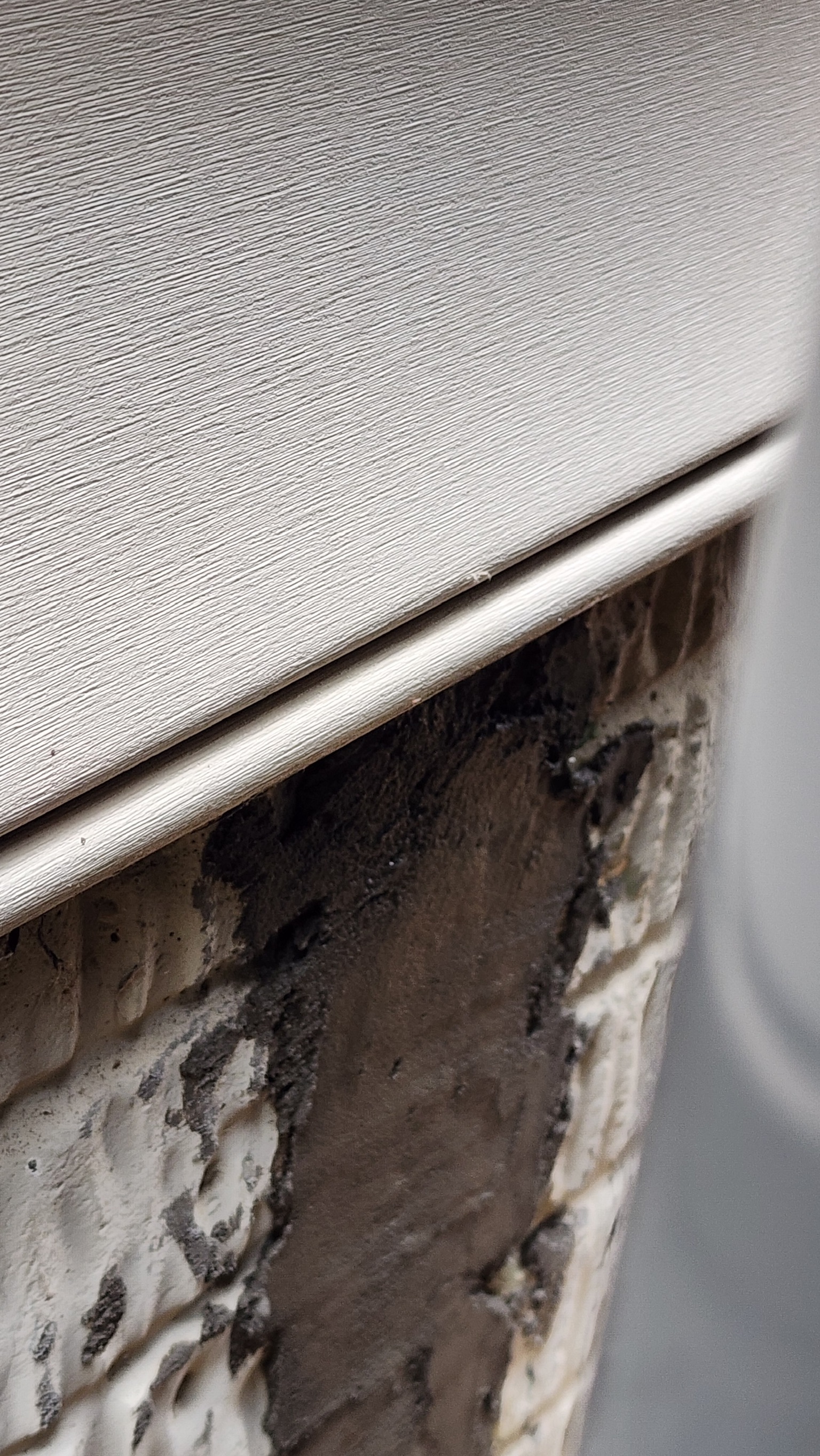
The Drainage Problem Behind Every Leaning Wall
Why Maryland Retaining Walls
Fail — and How OBW Fixes Them
Retaining walls hold back soil. When the soil behind a wall becomes saturated — which happens routinely in Maryland's wet springs — it becomes significantly heavier and pushes outward with more force than a dry soil mass. A wall without adequate drainage behind it is fighting against that saturated weight with nothing but its own mass and footing resistance.
OBW's approach to retaining wall repair begins with drainage. Walls that are repaired structurally without addressing the drainage source will face the same saturated soil pressure next spring. We install perforated drain tile behind the wall, add or clear weep holes to provide pressure relief, and correct the drainage conditions that allowed the saturation to build up in the first place.
Structural repairs follow: tieback anchors driven through the wall into stable soil for leaning or bowing walls, crack repair in poured concrete or masonry, and mortar joint repointing in block and stone walls. Our waterproofing background gives us an unusual advantage in retaining wall work — most of what fails a retaining wall is the same drainage failure that causes basement water problems.
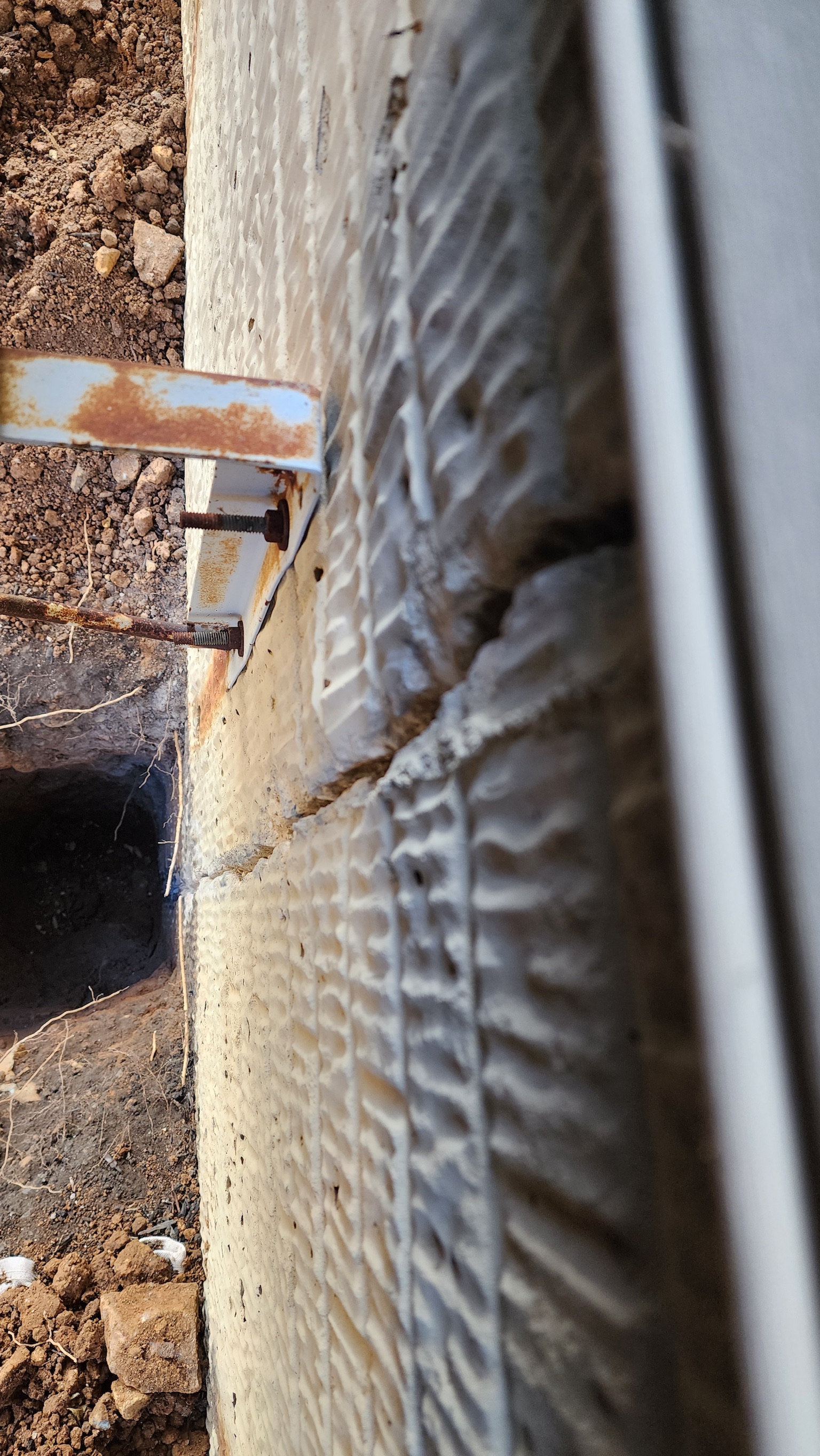
Block retaining wall with forward lean — tieback anchors and drainage correction restored stability
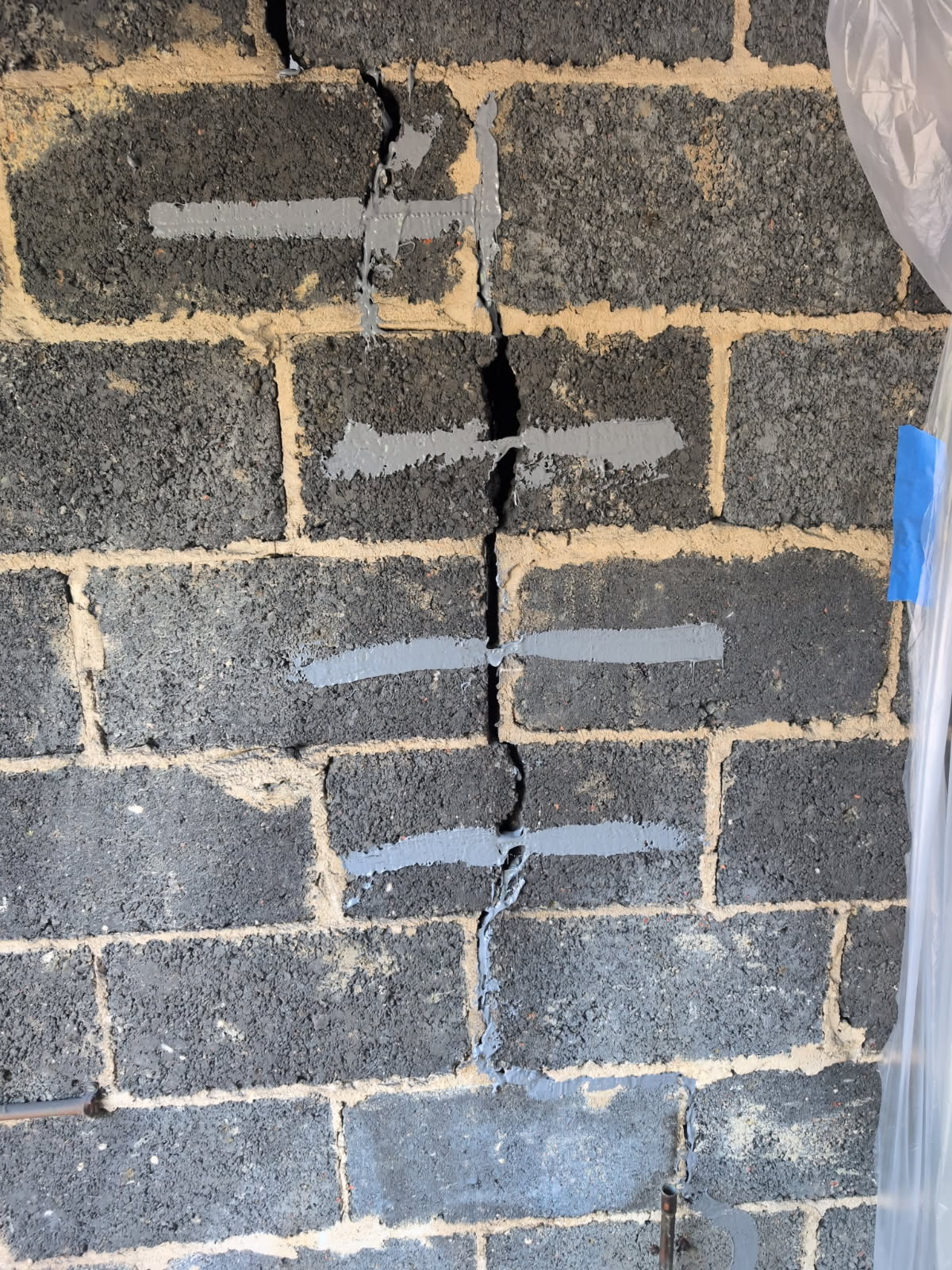
Early Signs of Wall Failure
Warning Signs Your Retaining
Wall Needs Attention
Retaining wall failure rarely happens suddenly. These signs appear months or years before catastrophic failure — which is when repair is still viable.
- Visible forward lean — the top of the wall tilts toward you when viewed from the front
- Horizontal cracks running across the wall face — particularly mid-height on block walls
- Sections bulging forward relative to adjacent wall panels
- Water seeping through the wall face rather than draining behind it
- Separation at corners or where the wall abuts the house foundation
What the Work Includes
OBW's Retaining Wall Repair Services
Every repair method addresses a specific type of wall distress. No single solution fits every wall — the right repair depends on wall type, movement amount, and drainage conditions.
Tieback Anchor Installation
Steel tieback anchors driven through the wall into stable soil behind it — resisting further forward movement and allowing gradual recovery.
Helical Tieback Systems
Screwed helical tiebacks for walls where anchor soil conditions require more controlled installation — residential and commercial applications.
Drainage Installation
Perforated drain tile, gravel backfill, and weep hole clearing to relieve hydrostatic pressure — addressing the cause, not just the symptom.
Concrete Crack Repair
Structural crack repair in poured concrete retaining walls using hydraulic cement and appropriate injection methods depending on crack activity.
Mortar Joint Repointing
Block and stone retaining walls with deteriorated mortar joints cleaned and repointed to restore wall continuity and resist water infiltration.
Written Repair vs. Replace Assessment
Every inspection delivers an honest repair-versus-replace recommendation based on movement, condition, drainage, and cost comparison.
The Repair Process
How OBW Repairs Maryland
Retaining Walls
Drainage first, structural repair second. Every retaining wall job follows this sequence — because a structurally repaired wall with a drainage problem is just a delayed failure.
Wall & Drainage Assessment
We measure lean, identify crack patterns, assess drainage conditions, and examine the soil conditions visible behind the wall.
Repair vs. Replace Recommendation
Based on movement, condition, and drainage findings, we recommend the honest course of action — tieback, drainage correction, or replacement.
Drainage Correction First
If hydrostatic pressure is the driver, drainage is addressed before or alongside structural repair — otherwise the repaired wall faces the same forces.
Tieback or Crack Repair Installation
Tiebacks installed, mortar joints repointed, concrete cracks repaired. Each repair is documented with before and after photography.
Recent Projects
Retaining Wall Repairs
in Maryland
Each project required a different combination of structural repair and drainage correction based on wall type and failure mode.
Baltimore County Block retaining wall with 3" forward lean — four tieback anchors, drainage tile installed, weep holes cleared.
Harford County Stone wall with separated mortar joints — repointed, perforated drain tile added, slope grading corrected.
Cecil County Poured concrete retaining wall with horizontal crack — helical tiebacks and hydraulic cement crack repair.
Carroll County Timber retaining wall replaced with concrete block — drainage tile and geotextile fabric installed behind new wall.
Honest Answers
Retaining Wall Repair Questions
from Maryland Property Owners
Call (443) 855-5600 if your question isn't here. Residential and commercial retaining wall inquiries welcome.
How can I tell if my retaining wall is failing?
The most visible sign is leaning — a wall that was plumb when built is now visibly tilted forward, away from the soil it's retaining. Even a two- or three-inch lean at the top of a four-foot wall is significant. Concrete block and stone walls often show leaning before they crack; poured concrete walls tend to crack before they visibly tilt.
Horizontal cracks running across the face of a wall at a consistent height indicate that the wall is being pushed forward at that point by soil pressure — particularly common in block walls where the mid-height is the weakest zone. Stair-step cracking in block or stone walls following the mortar joints indicates differential movement at specific sections.
Bulging is another sign — a section of the wall that protrudes forward relative to adjacent sections. This indicates that the wall has moved at that point and may be close to failure. Separation at corners, where a retaining wall meets a foundation wall or another retaining wall, is also a warning sign. If you can see gaps at corners or where the wall connects to the house, call for an inspection.
What causes retaining walls to fail in Maryland?
The dominant cause is hydrostatic pressure — water that has saturated the soil behind the wall with no drainage path to escape. Maryland's clay soils hold water exceptionally well, and after a wet spring, the saturated mass behind a retaining wall can exert enormous lateral pressure. Walls that were built without adequate drainage — no gravel backfill, no perforated drain tile at the base, no weep holes — are particularly vulnerable.
Freeze-thaw cycling is a secondary cause. Water in the soil behind the wall freezes, expands, and pushes the wall forward. When it thaws, the wall doesn't always return to its original position. After enough cycles, the cumulative forward movement becomes visible. Maryland's climate — with multiple freeze-thaw events per winter — accelerates this process.
Tree root infiltration can both weaken mortar joints and displace wall sections. Large trees planted close to retaining walls are a common culprit in older landscapes. Root pressure is insidious because it's invisible until the wall has already moved significantly.
When should a retaining wall be repaired versus replaced?
A retaining wall that has moved less than two inches, has no significant structural cracks, and whose foundation has not been undermined is generally a repair candidate. Tieback anchors or helical tiebacks can be installed to resist further movement, and drainage improvements can address the root cause. This is typically more cost-effective than full replacement.
A wall that has moved more than two to three inches, has cracking that has compromised the structural continuity of the wall (through-cracks, spalling, disintegrating mortar joints), or shows evidence that the footing has been undermined or shifted is often a replacement candidate. Trying to repair a wall that has moved that much typically costs nearly as much as replacement without the same result.
There are exceptions in either direction — some walls look bad but are actually structurally sound enough to repair; others look cosmetically okay but have a drainage problem so severe that repair is futile without a complete rebuild. OBW's inspection will give you an honest assessment of which category you're in.
Do retaining wall repairs require permits in Maryland?
Permit requirements for retaining walls vary by county and by the height and type of wall. In Maryland, retaining walls over four feet in height (measured from the bottom of the footing) typically require a permit from the relevant county building department. Some counties require an engineer's stamp for walls above certain heights.
Repairs to existing walls — tieback anchors, drainage installation, crack repair — are more ambiguous and vary by jurisdiction. Baltimore County, Anne Arundel County, Harford County, and other OBW service areas each have their own thresholds. OBW will identify permit requirements for your specific project and county before work begins. We do not recommend proceeding with structural retaining wall work without confirming the permit status first.
What does retaining wall repair typically cost in Maryland?
Repair costs depend heavily on the length and height of the wall, the repair method required, and the drainage work involved. Tieback anchor installation for a moderately distressed wall section (10–20 linear feet) typically runs in the $3,000–$8,000 range. Helical tieback systems for longer or more severely distressed sections can run higher. Drainage installation behind the wall — perforated pipe, gravel backfill, weep hole clearing — is often an additional cost.
Full wall replacement costs depend on wall type and length. Block and concrete replacement runs $40–$80 per linear foot for shorter residential walls; engineered systems for taller walls or commercial applications run significantly more.
OBW provides written, itemized quotes after inspection. Retaining wall projects are not quoted without measuring — the variables are too significant. If you have had a contractor give you a firm price without seeing the wall, treat that number skeptically.
Why Oriole
Why Maryland Property Owners
Choose OBW for Retaining Walls
Retaining wall failure is a drainage problem at its root. No one in Maryland understands drainage and soil behavior better than a company founded on it in 1953.
Drainage as Root Cause
Most Maryland retaining wall failures are drainage failures. OBW's waterproofing background makes us unusually well-equipped to diagnose and correct the cause.
Maryland Clay Expertise
Piedmont clay and freeze-thaw cycling drive most retaining wall distress in our service area. We design repairs for these specific conditions.
Honest Repair vs. Replace
We will tell you when replacement is the right answer, even though repair is often more profitable. We are not trying to sell you a repair that won't hold.
Family-Owned Since 1953
Three generations of the Pirog family have been solving Maryland foundation and drainage problems. Amber Pirog leads the company today.
Act Before Spring Rains Load the Wall Again.
Getting Started with
Retaining Wall Repair
Walls that are repaired before they reach the replacement threshold save significantly. A leaning wall that is borderline today becomes a replacement project after one more wet season.
Free Wall Inspection
OBW inspects the wall, measures movement, identifies drainage conditions, and provides a repair-versus-replace assessment. Free, no obligation.
Written Repair Plan & Quote
You receive a written, itemized quote covering drainage correction and structural repair. Permit requirements identified. No pressure to sign the same day.
Drainage + Structural Repair
OBW's crew corrects drainage and installs structural repair in the correct sequence. Documentation provided at completion.
That Leaning Wall Won't Fix Itself.
Free inspection. Honest repair vs. replace recommendation. No commissioned salespeople.
Family-owned since 1953 · MHIC #4247 · Lifetime Transferable Guarantee