
Basement Waterproofing · Moisture Control
Vapor Barrier
Installation
in Maryland
Heavy-mil barriers stop moisture migration at the source — not after it's crossed your wall
20-mil reinforced polyethylene over dimple-board drainage matting, mechanically fastened and seam-sealed at every penetration. Part of a complete interior waterproofing system. Lifetime transferable guarantee. Honest, consultative guidance.
Part of a Complete Waterproofing System
What Vapor Barrier Installation
Actually Does
A vapor barrier controls moisture vapor migration through your basement walls and floor — it slows the movement of water molecules through porous concrete before they reach your living space. In Maryland's Piedmont clay environment, foundation walls are under near-constant moisture pressure. A correctly installed barrier is the last line of defense against that vapor load.
The critical distinction: a vapor barrier is not a standalone waterproofing solution. It works in combination with drainage matting and a perimeter drain tile system. The matting creates an air gap behind the barrier, giving any liquid water that gets through the wall a path down to the footer drain rather than pooling behind the barrier and peeling it off the wall.
OBW installs vapor barriers as part of complete interior systems — never as a single product sold as a waterproofing solution. If an inspector tells you a vapor barrier alone will fix your wet basement, get a second opinion.
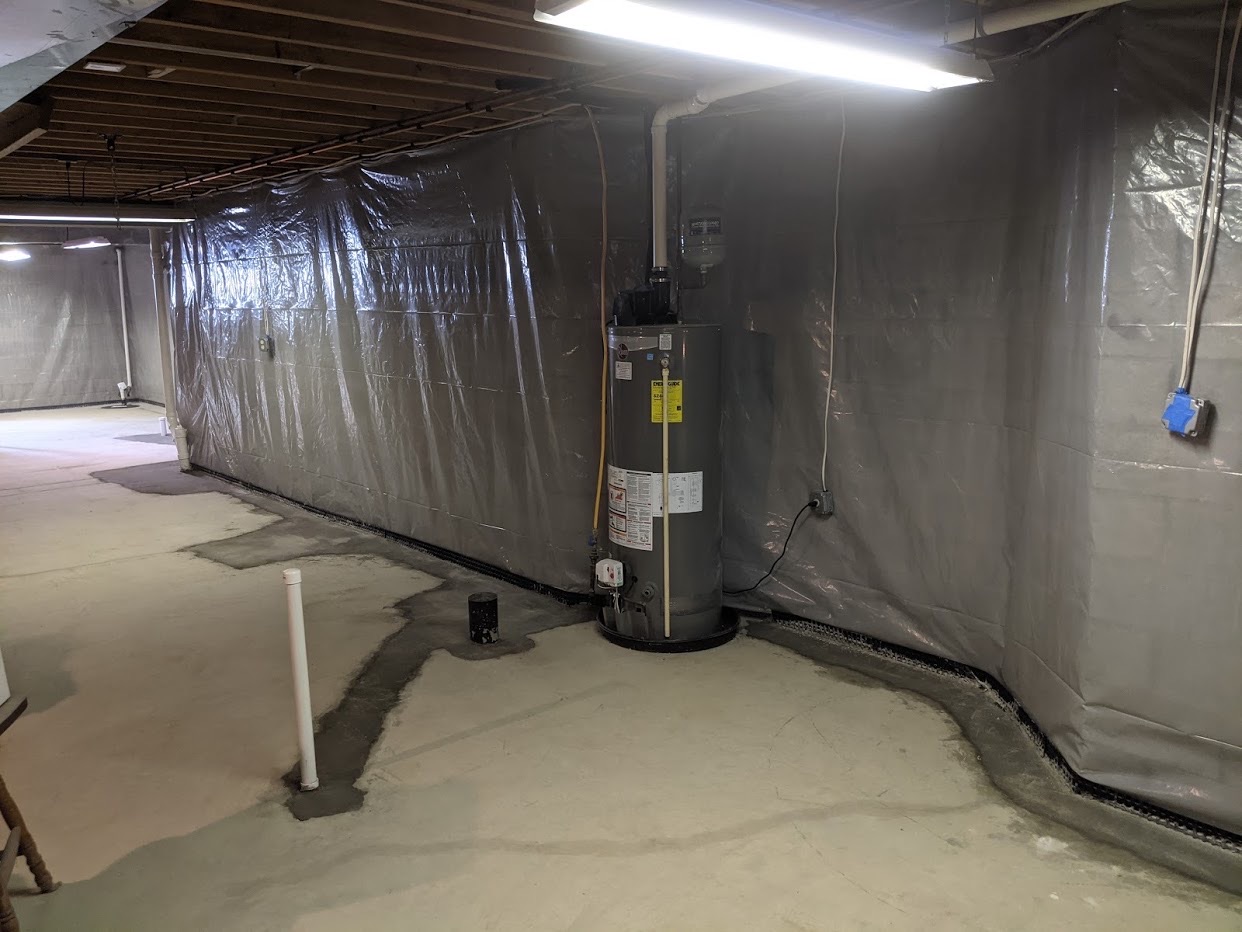
Completed barrier installation — drainage matting behind, 20-mil barrier over, seams sealed
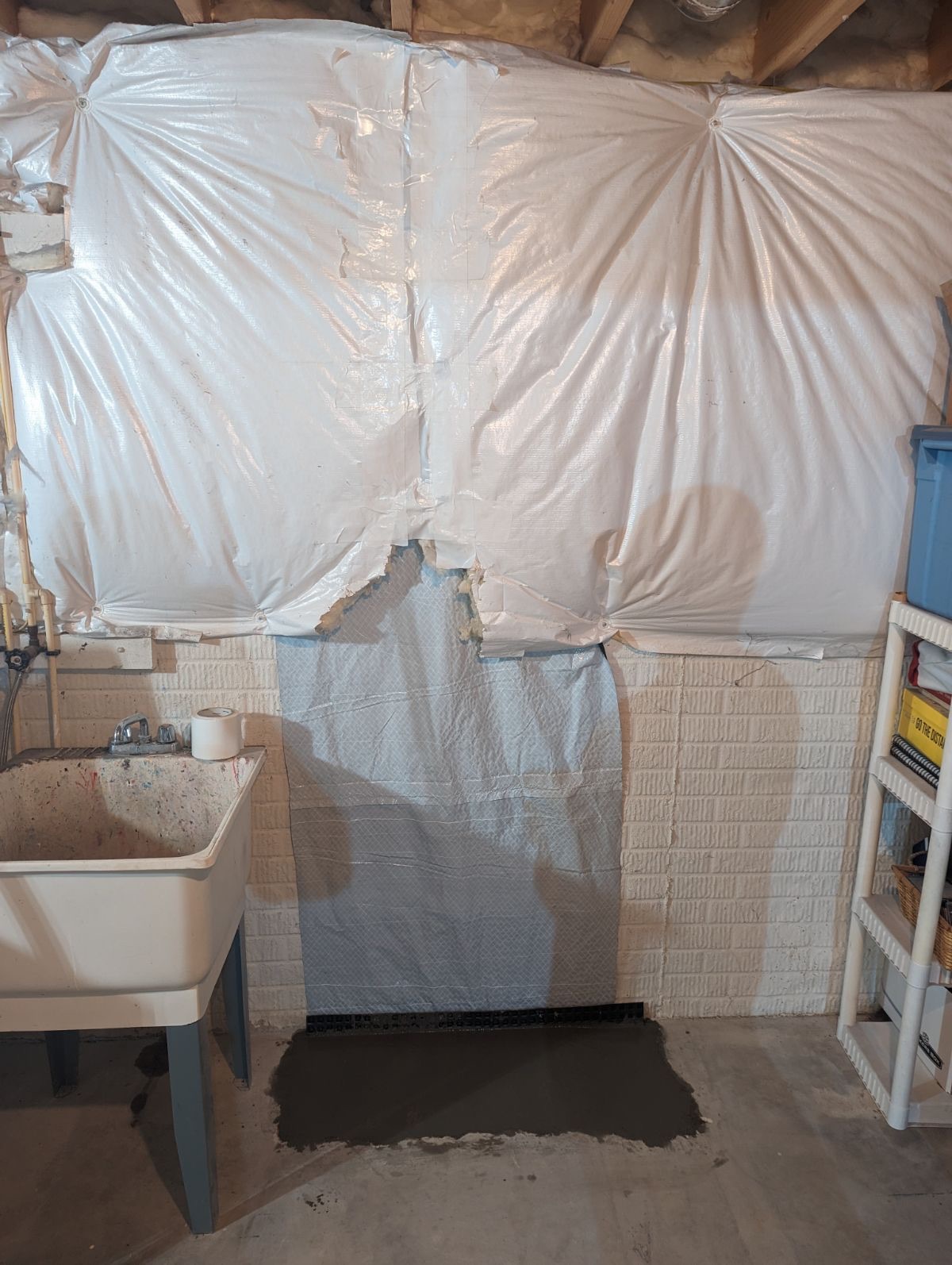
Moisture Doesn't Always Announce Itself
Signs Your Basement Walls
Need a Vapor Barrier System
Maryland's clay soils hold moisture for days after a storm. Most vapor migration through basement walls is invisible until the damage is already done.
- Persistent musty or damp smell even without visible standing water
- White mineral deposits (efflorescence) on foundation walls — evidence of ongoing water migration
- Mold or mildew forming on stored items, drywall, or wood framing
- Peeling paint or blistering on basement walls — moisture forcing its way through
- Condensation on walls or floor after Maryland summer humidity or heavy rain
What You Get
What OBW's Vapor Barrier System Includes
Every component is specified for Maryland conditions. No tape-only shortcuts. No undersized material. No vapor barrier sold without drainage.
20-Mil Reinforced Polyethylene Barrier
Specified for basement wall applications in contact with Maryland clay soil. Heavy-mil construction resists puncture during install and holds up under freeze-thaw pressure for decades.
Dimple-Board Drainage Matting
Mechanically fastened to the wall before the barrier goes up. The dimple profile creates an air gap that channels water infiltration down to footer drainage rather than trapping it behind the barrier.
Mechanical Fastening — Not Tape Only
Every OBW installation is fastened at 12-inch intervals along the top edge and at structural points. Tape-only installations peel. Mechanical fasteners hold for the life of the system.
Seam Sealing at All Joints & Penetrations
Every seam is taped and every penetration — pipes, columns, conduit — is individually sealed. A single unsealed pipe penetration defeats the entire barrier. OBW does not skip this step.
Footer Tie-In to Drain Tile
Matting is tucked into the perimeter drain tile at the base. Water that moves behind the barrier finds the drain — not your floor. Barrier without drainage is an incomplete system.
Lifetime Transferable Guarantee Coverage
Vapor barrier installation is covered under OBW's Lifetime Transferable Guarantee — the same guarantee that covers the full waterproofing system. Transfers automatically when the house sells.
Four Steps. No Shortcuts.
How OBW Installs a
Vapor Barrier System
Every installation follows the same four-step sequence. The order matters — drainage matting goes up before the barrier. This is not negotiable.
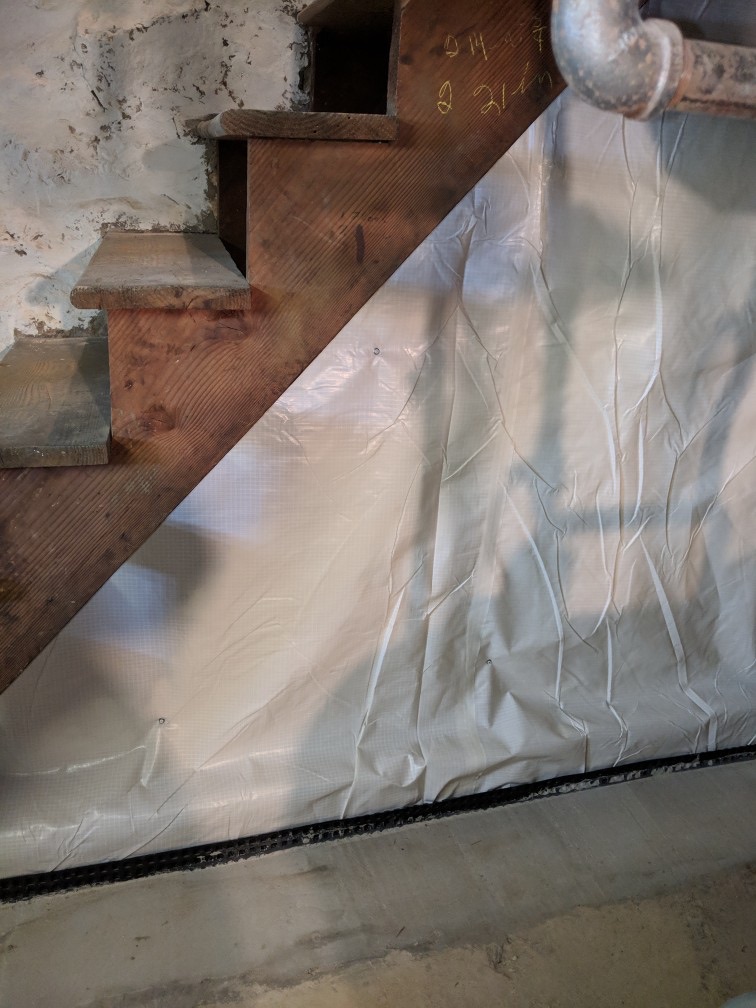
Wall Prep & Drainage Matting
Clean wall surface, install dimple-board drainage matting mechanically fastened at 12-inch intervals. Matting creates an air gap and channels water down to the footer. This step is non-negotiable — barrier without matting traps water against the wall.
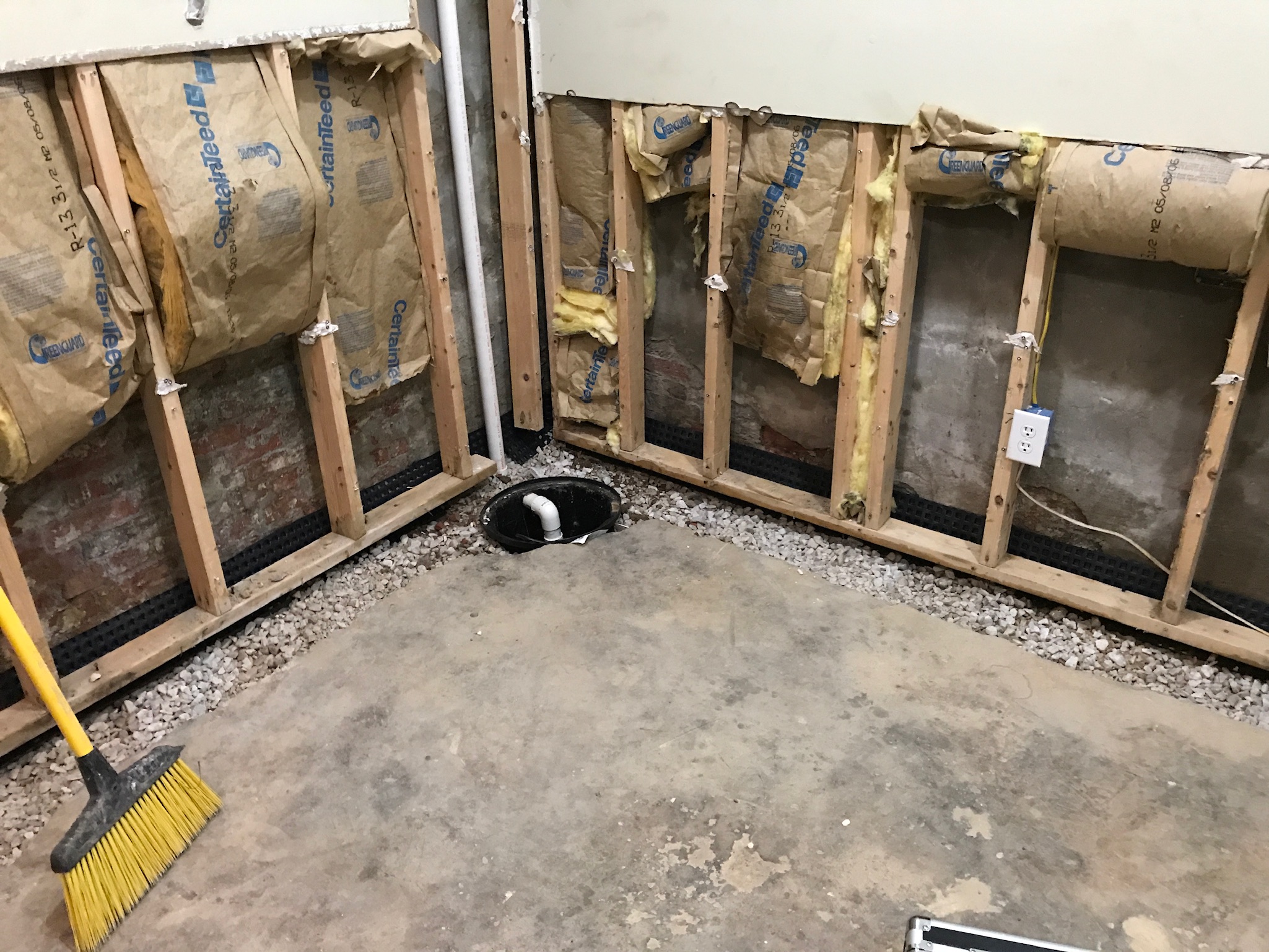
Footer Tie-In
Matting tucks into the perimeter drain tile (if present) or is sealed at the base slab. Water path from wall to sump is confirmed before barrier goes up. If drain tile is not present, we advise on adding it before proceeding.
Vapor Barrier Installation
20-mil reinforced polyethylene applied over matting, sealed at all seams, mechanically fastened at the top edge. Barrier extends to the floor and overlaps floor barrier where applicable. No gaps, no shortcuts.
Seam Sealing & Inspection
All penetrations — pipes, columns, electrical conduit — are sealed individually. Final walk-through confirms no gaps, pulls, or unsealed seams. This is the step most contractors skip. OBW does not.
Real Maryland Jobs
Recent Vapor Barrier Projects
Across Maryland
Every photo below is an OBW job — real basements, real Maryland homeowners. Our inspectors document before, during, and after every installation.
Baltimore County Full wall vapor barrier over dimple-board matting. Footer tied into existing drain tile. Dry since install.
Harford County Drainage matting + 20-mil barrier installed in tandem with new perimeter drain tile. Single-day job.
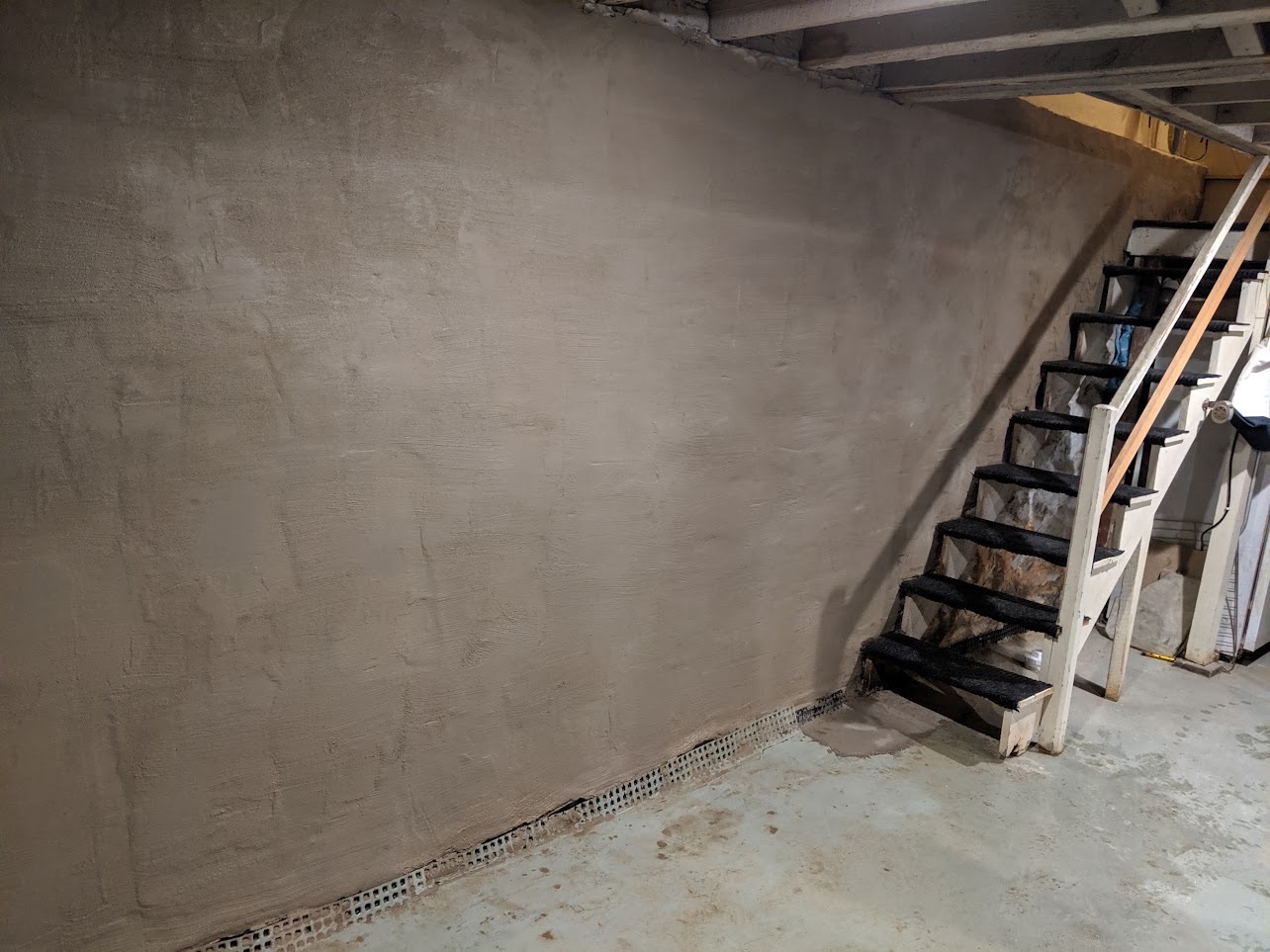 Carroll County
 Wall vapor barrier system installed as part of complete interior waterproofing. Mechanically fastened throughout.
Cecil County Completed installation — barrier, matting, seams sealed. Tied into new Zoeller pump system.
Honest Answers. No Sales Pitch.
Common Questions About
Vapor Barrier Installation
If your question isn't here, call (443) 855-5600. Our inspectors answer questions and give honest, consultative guidance.
What thickness vapor barrier does my Maryland basement need?
20-mil is the appropriate spec for a basement wall application subject to soil contact and hydrostatic pressure. Thinner 6-mil and 10-mil barriers are sold widely but they puncture during installation and degrade faster under Maryland's clay-loaded soil. OBW specifies 20-mil reinforced polyethylene for wall applications.
Floor applications in conjunction with drainage systems can use lighter material where the drainage tile handles the load. If a contractor is quoting you a 6-mil barrier for your basement walls, ask why — the cost difference between 6-mil and 20-mil is marginal, but the performance difference over a decade in Maryland conditions is not.
Is a vapor barrier the same as waterproofing?
No, and confusing the two is how homeowners get sold incomplete solutions. A vapor barrier controls moisture vapor migration through walls and floor — it slows the movement of water molecules through porous concrete. It does not intercept or redirect liquid water that enters through cracks or the cove joint.
Used alone on a wet basement, a vapor barrier will trap water behind it and eventually fail or peel. Properly installed, a vapor barrier works in combination with drainage tile and a sump pump — not as a standalone solution. When a contractor sells you a vapor barrier as your waterproofing solution, they're selling you half a system.
How is a vapor barrier installed on basement walls?
Drainage matting (dimple board) is mechanically fastened to the wall first, creating an air gap that channels any water that gets through the wall down to the drain tile. The vapor barrier is then installed over the matting, sealed at seams with tape, and tucked into the drain tile at the base.
The mechanical fastening pattern matters — tape-only installations eventually peel. OBW mechanically fastens at 12-inch intervals. Every penetration through the barrier — pipes, columns, electrical conduit — is sealed individually. A barrier with one unsealed pipe penetration fails at that point and wicks moisture behind the rest of the installation.
How long does a vapor barrier last?
A properly installed 20-mil reinforced barrier in a basement with functioning drainage typically lasts 25+ years. The failure mode is almost never the material itself — it's installation shortcuts: gaps at seams, insufficient mechanical fastening, or installation without drainage so water pressure builds behind the barrier.
OBW's barriers come under the same Lifetime Transferable Guarantee as the waterproofing system. When you sell the house, the guarantee transfers to the next owner. That's a documented disclosure item in Maryland real estate transactions — it's a real asset, not just warranty language.
Can a vapor barrier be installed in a finished basement?
On walls, yes — it requires removing the drywall to access the foundation wall, similar to other interior waterproofing work. We work to preserve as much of the existing finish as possible. In most cases we remove the bottom 12–18 inches of drywall along the perimeter rather than flood-cutting the full wall — meaningfully less to restore afterward.
On the floor, vapor barrier beneath a floating floor system is standard practice for finished basements. We assess the existing finish and advise on minimum removal scope during inspection. There is no honest way to quote this scope without seeing the basement — an inspector who prices it over the phone has either guessed or intentionally lowballed.
70 Years of Maryland Basements
Why Maryland Homeowners Choose
Oriole Over National Brands
Three generations of the Pirog family have been solving Maryland basement problems since Frank Pirog Sr. founded Oriole in 1953.
Honest, Consultative Guidance
Our inspectors take a consultative approach — guidance first, not a sales pitch. You get an honest assessment of what your basement actually needs, without pressure to upgrade.
Lifetime Transferable Guarantee
Our vapor barrier guarantee transfers to the next homeowner automatically. National franchises don't offer this. In Maryland real estate, it's a documented selling point.
Maryland-Specific Engineering
We spec 20-mil barriers for Maryland clay and Piedmont soil conditions. Generic national-brand installs use thinner material that degrades faster under this state's freeze-thaw cycles.
Family-Owned Since 1953
Frank Pirog Sr. founded Oriole over 70 years ago. Today Amber Pirog leads the same family company with the same standard: do the job right, every time.
From Satisfied Maryland Homeowners
What Maryland Homeowners Say About Vapor Barriers
★★★★★
"The humidity in my basement went from 78% to under 50% after the vapor barrier and dehumidifier were installed. The musty smell is completely gone."
Vapor Barrier + Dehumidifier
★★★★★
"They recommended the vapor barrier rather than the full interior drainage system because that was appropriate for my situation. Smaller scope, right result."
Vapor Barrier Installation
★★★★★
"Installed in one day, crawl space looks completely different. The encapsulation has held through two Maryland winters and one very wet spring."
Crawl Space Vapor Barrier
Ready When You Are. No Pressure.
Three Steps to a Drier
Maryland Basement
From first call to finished installation, most OBW vapor barrier jobs are scheduled and complete within two to three weeks.
Schedule a Free Inspection
A local OBW inspector visits your home, identifies your specific moisture entry points, and assesses full scope — at no charge and no obligation. No phone quotes. No pressure.
Get Your Written Estimate
You receive a written, itemized quote the same day as your inspection. A specific price before a single tool comes out of the truck. We itemize the barrier, the matting, and any drainage work separately.
We Handle the Work
Our crew installs your system, seals every seam and penetration, and walks you through the Lifetime Transferable Guarantee before they leave. Most installations complete in one day.
Ready to Stop the Moisture?
Free inspection. Written estimate same day. No pressure — honest, consultative guidance.
Family-owned since 1953 · MHIC #4247 · Lifetime Transferable Guarantee